
Heritage consultant David Hicks brings us the stories behind some of East Lothian’s historic properties.
Some buildings are an architectural set piece, the vision of one designer and reflective of a point in time, but Carberry Tower is the complete opposite. It is a jigsaw puzzle of different time periods and architectural styles, and to walk around the site is to see how Scottish architecture has developed over 500 years.
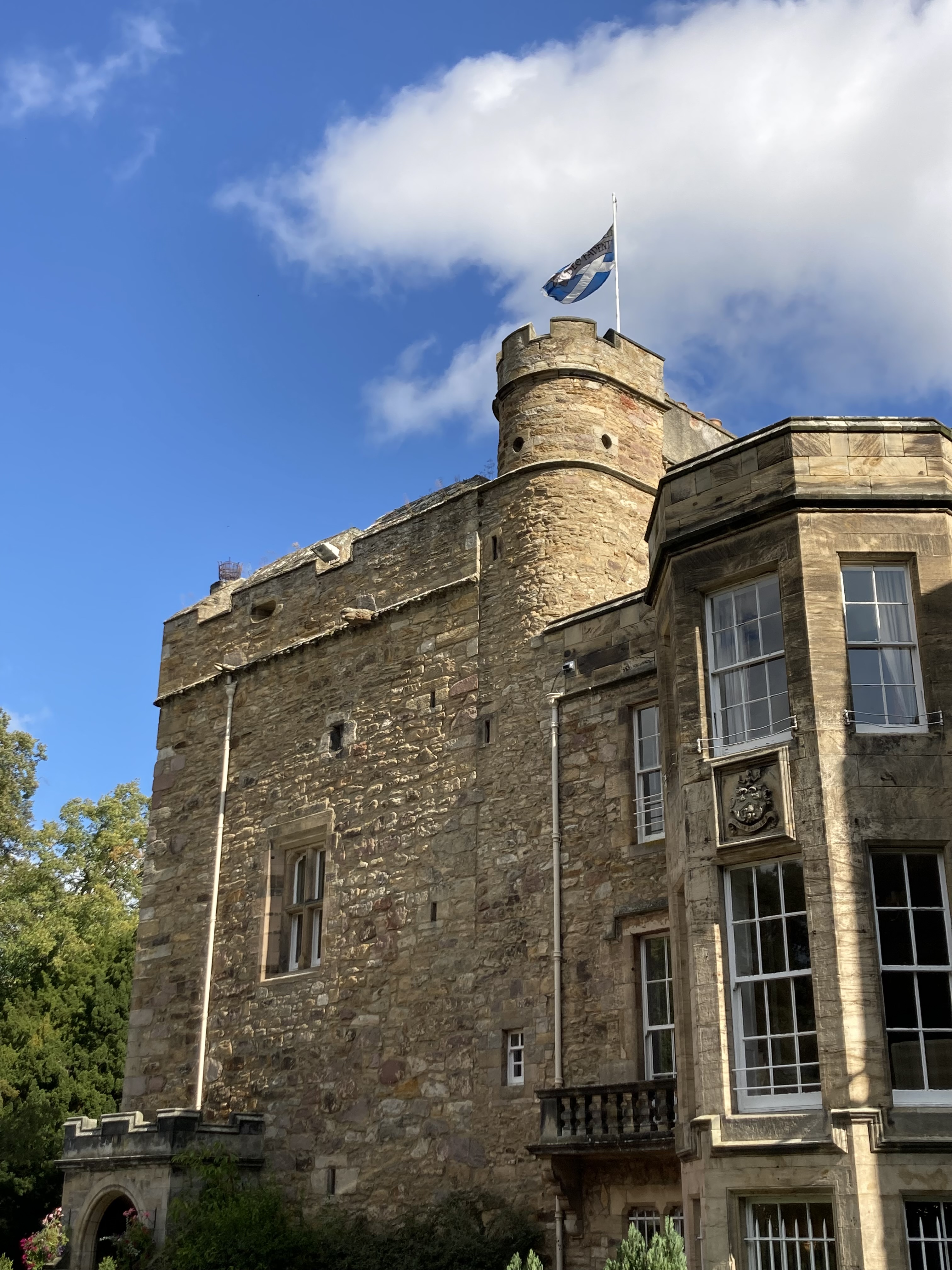
You can see the oldest part of the building very clearly, the sturdy-looking tower that today forms the main entrance. It probably dates to the early 1500s but could be even earlier, built at a time when grand houses were designed with defence in mind.
The stone walls are seven feet thick in places, with gun loops cut into the parapet wall. The strange winged figures decorating the top of the tower are probably meant to be cherubs, a highly fashionable style of decoration at the time.
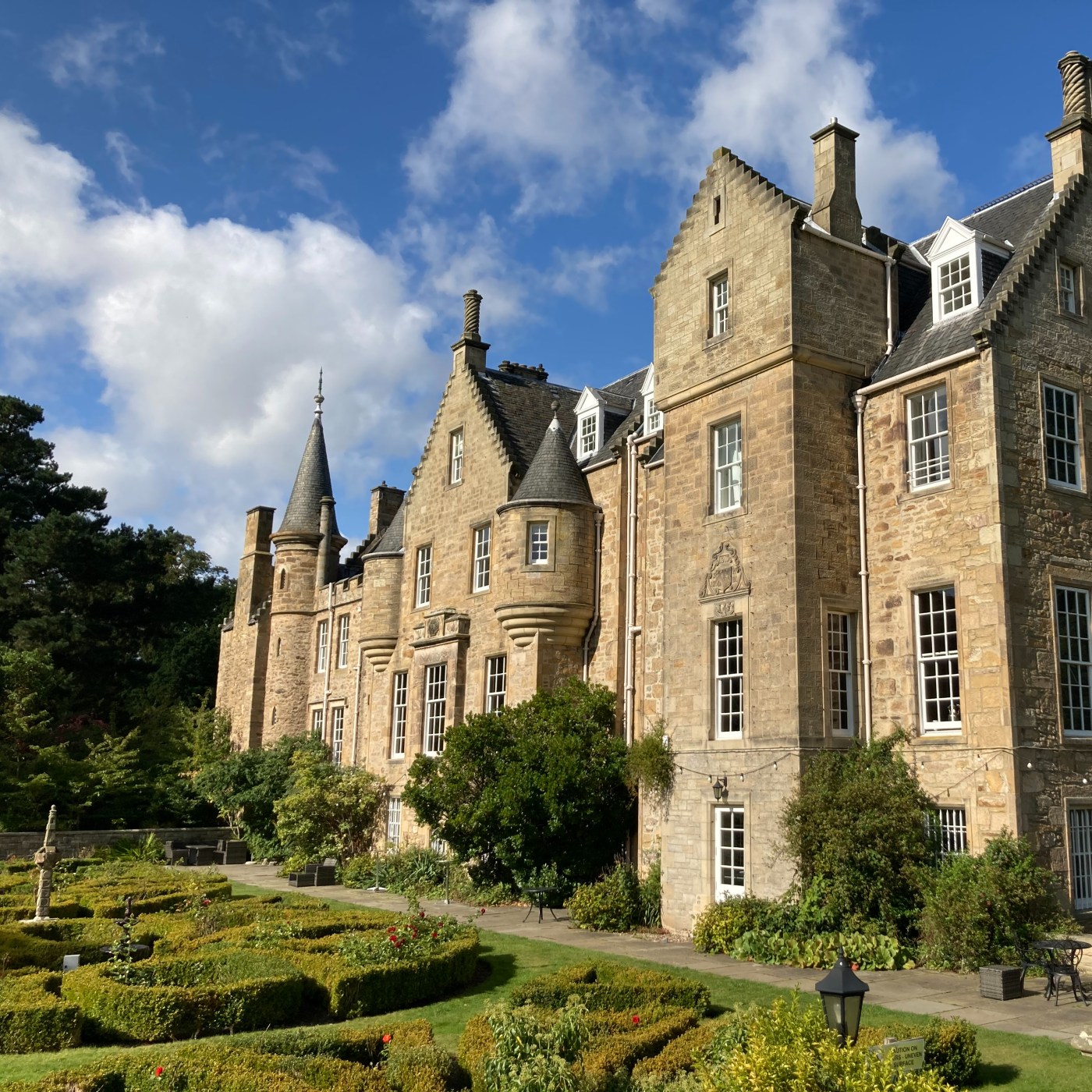
This fairly basic structure was extended around 1600 with a new three-story building that would have added substantial space, light and comfort. This Jacobean addition is largely hidden by later changes, but you
can still see the crow-stepped roof line, a classic feature of this period. The Georgian period saw more changes, most obviously with the large sash and
case windows and bay window next to the main entrance.
Then, in the 1860s, an entirely new wing was built behind the old tower, adopting more Gothic styles. The real joy of this building, though, is the south front with its terraced formal garden, created in the Edwardian period by Lord Elphinstone and his wife, Lady Mary Bowes-Lyon. It uses every trick in the book to turn the house into a baronial mansion according to contemporary tastes, with pepper pot turrets, an oriel window with a carved coat of arms and twisted ‘barley sugar’ chimney stacks.
In the 1960s, Carberry Tower was gifted to the Church of Scotland, and a new chapel was built in the grounds. This was inspired by modern Scandinavian designs, using natural materials such as stone and timber, to create a highly evocative space that blends with its natural woodland setting.
There is yet another historic building on the site, an ornate little wooden house built as a game larder. It is carefully designed to keep the game fresh, sitting on stilts, with slatted windows and a louvre in the roof to ensure a good flow of air. Like the old house and the chapel, this diminutive structure is also a listed building. This collection of architectural treasures makes Carberry Tower a peculiarly distinctive and interesting place.


 yourlocallife.co.uk