
Heritage consultant David Hicks brings us the stories behind some of East Lothian’s historic properties.
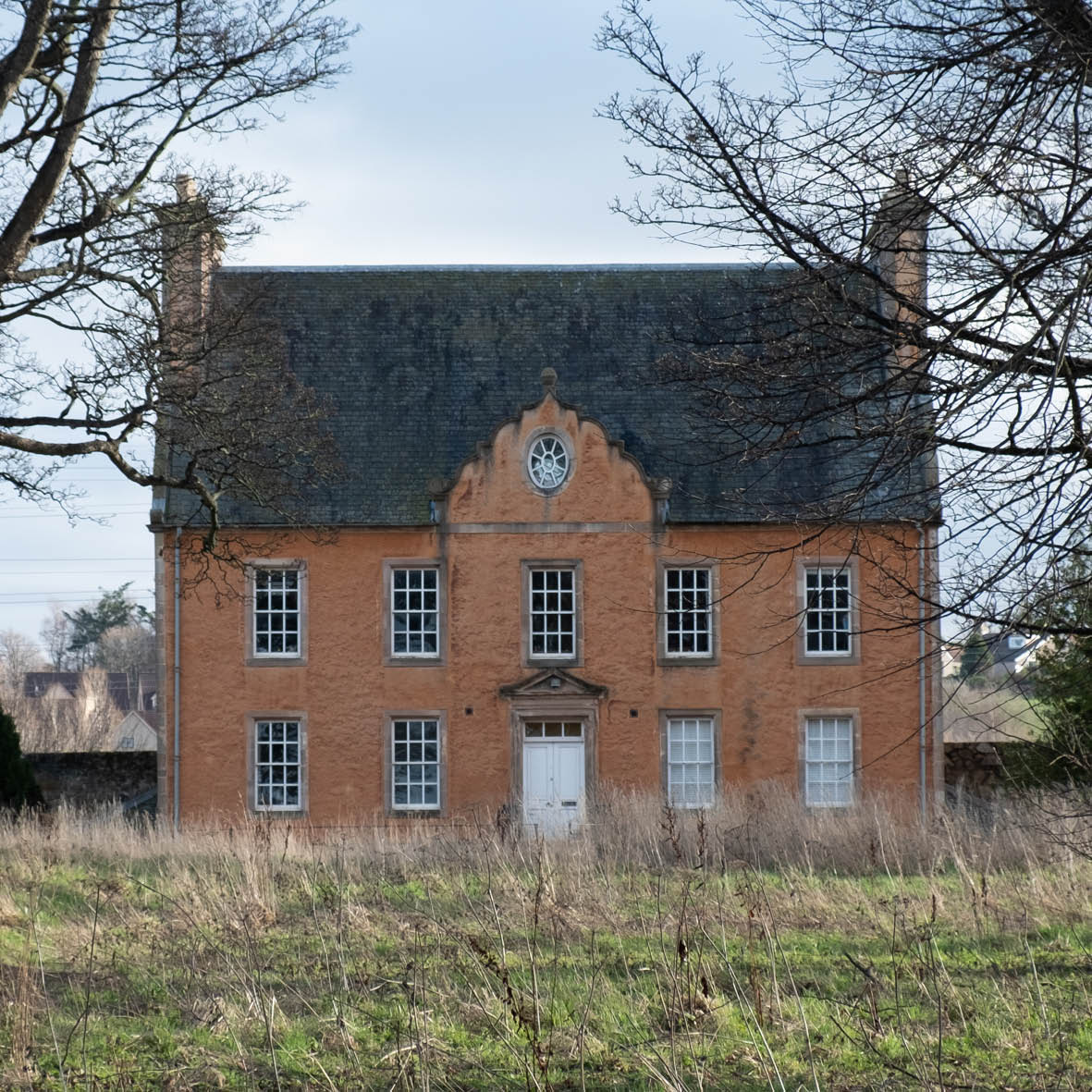
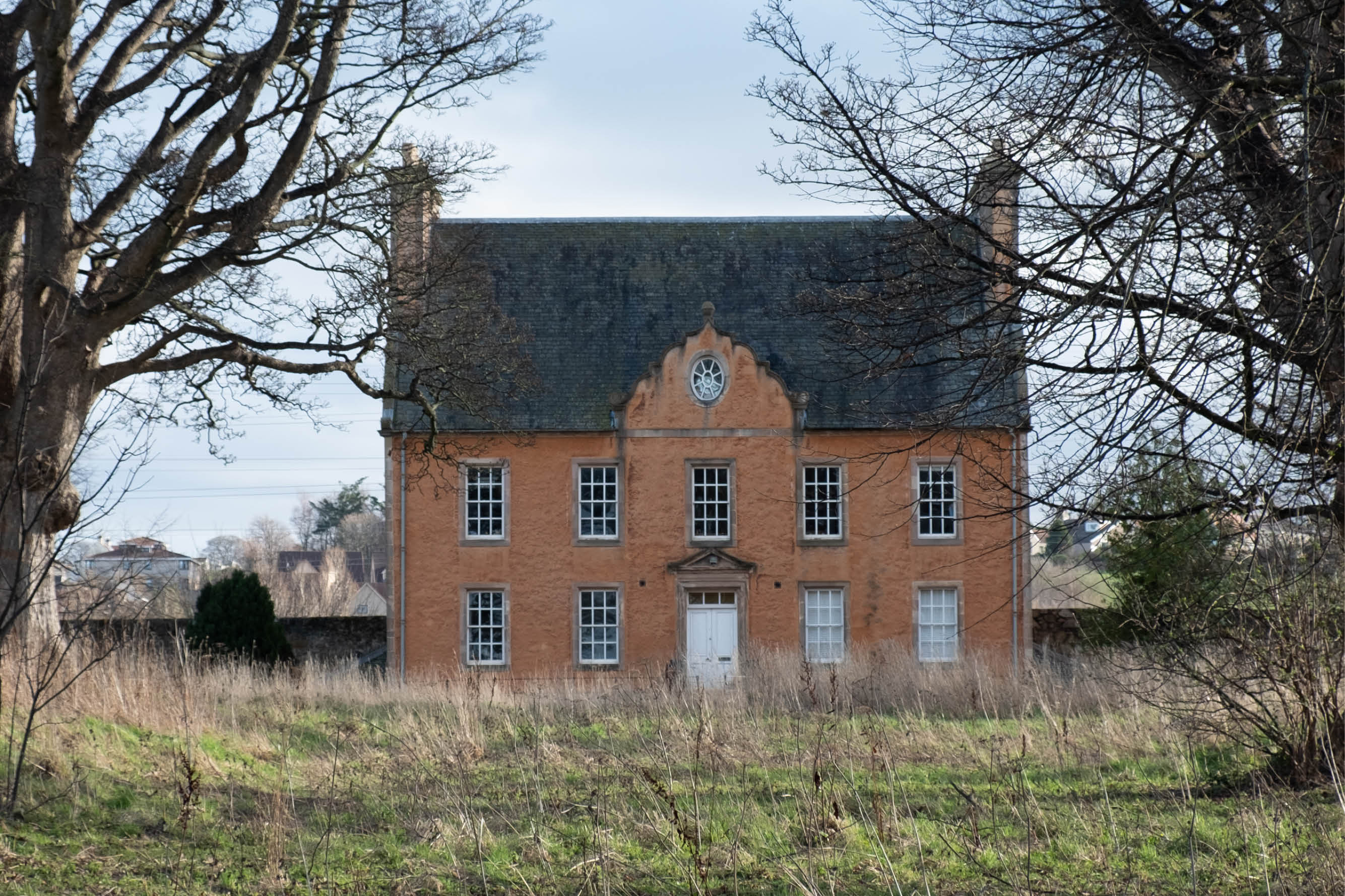
One of the most noticeable landmarks as you travel up the A1 is Bankton House near Prestonpans, a splash of colour in the landscape that grabs your attention as you head into Edinburgh. Once described as ’a standing disgrace’ to the county, an extensive restoration project 30 years ago saved this old house and its part in one the country’s most important events.
The property was originally known by the lovely name of ‘Olivestob’, with the house being built around 1720. It very much follows the fashions of the day, a solid symmetrical building with decorative flourishes inspired by the classical past around the main entrance and roofline. The stonework is harled, covered in a lime-based coating, often used at the time to help weatherproof the building. A coloured lime wash was also applied as part of the restoration, a mixture known as copperas, which gives the building its distinctive orangey colour.
On one side of the main house is a large doocot, once used for keeping pigeons for the table. On the other is a belvedere, a pavilion used as a viewpoint to admire the estate. Opening up houses to the surrounding landscape was a new style for the time, with the south front also designed to face onto a substantial orchard.
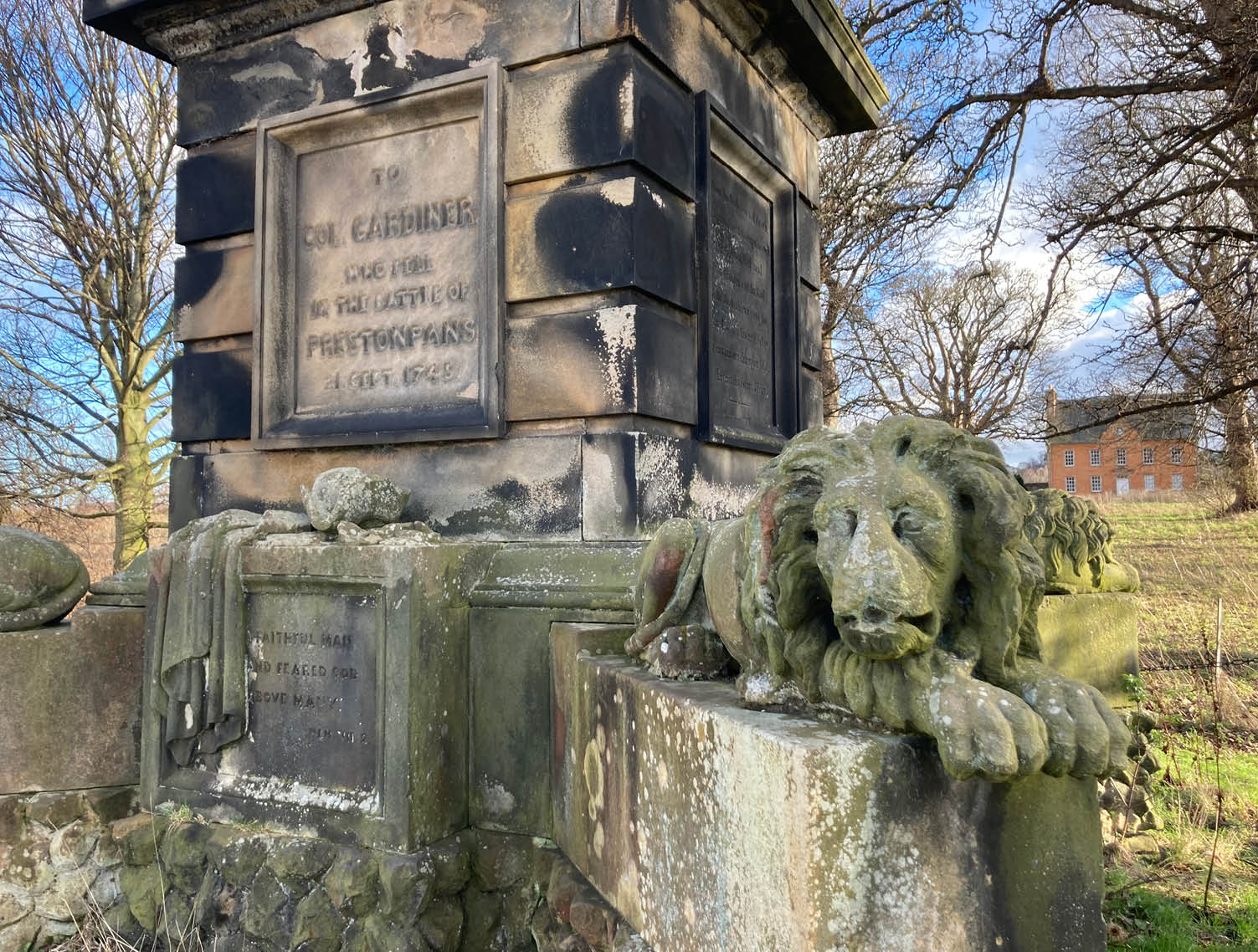
Back in 1745, the owner of the house was Colonel James Gardiner, a distinguished soldier who had fought in wars on the continent, but his last battle was to be within sight of his own home. A Jacobite army led by Bonnie Prince Charlie had cornered a small force of British troops near Prestonpans, including Gardiner’s own regiment of dragoons. The British soldiers broke and fled, and Colonel Gardiner was seriously wounded attempting to rally the troops. He was found by a servant who took him to the manse at Tranent, but Gardiner later died of his wounds. A monument to the gallant colonel was built in Victorian times close to Bankton House.
Today the house is privately owned, but if you follow the battlefield trail, you can see the monument and take a peek inside the undercroft of the doocot. This now has a small exhibition on Colonel Gardiner and his part in the battle. It is well worth a visit and appreciating how this treasure has been saved for future generations.
oric houses often have a tale of survival against the odds, but there can be few as dramatic as Archerfield House. Only twenty years ago, this grand old building was a derelict shell with boarded-up windows and a grand entrance replaced with barn-like doors to accommodate tractors. The contrast to the exclusive country retreat of today could not be more stark.
The earliest parts of the house date back to the late 1600s, built by the Nisbet family as they became lairds of Dirleton. In the 1730s, Archerfield was extended and re-modelled by the Scottish architect James Douglas, creating the symmetrical frontage and main entrance you still see today. The projecting entrance bay forms the eye-catching centrepiece, with classical pilasters framing a window, an elaborately carved coat of arms, decorative scrolls and urns topping off the design.
In 1790 there were more changes to the house, led by the renowned architect Robert Adam, which would have transformed the interiors. The drawings he produced still survive, showing intricate plasterwork ceilings and plans for a new dining room, drawing room, library, and staircase, introducing a lighter, more elegant style with a striking colour scheme.
These developments would have made Archerfield one of the most fashionable houses in the country at the time, but not long after they were completed, the owners moved, and the building was let to a series of tenants. With the local tourism boom in the Edwardian period, the Prime Minister Herbert Asquith brought his family to stay at the house. It was during one of these holidays that he invited Winston Churchill to join him, to offer him the position of First Lord of the Admiralty.
During the Second World War, Archerfield was taken over by the military, and so began a period of steep decline. The elegant Adam interiors were removed and sold off, and the once grand mansion was used by a local farmer as a grain store. It would have been easy for a developer to make a case for full demolition, because what possible value does a ruin have? Yet, following a careful restoration, it now earns its keep again as the core of a thriving estate.
t Michael’s Church in Inveresk has to be one of the most noticeable buildings in East Lothian, perched on top of a hill and with its steeple easily seen as you speed along the A1.
Legend has it that a church was built here by Irish missionaries not long after the Romans left. During the medieval period a stone church was constructed, but by the end of the 1700s it was in a poor condition and in 1805 work began on a replacement.
The main body of this new church was designed by Robert Nisbet, and it must have come as something of a shock for the congregation. This was a building drawing on all the classical fashions of the day, a large, airy and light structure in direct contrast to a typical medieval church. A local tradition has it that one parishioner, “being somewhat alarmed at the barn-like shape”, asked the Duke of Buccleuch to fund the building of a steeple.
However it came about, an impressive tiered steeple designed by William Sibbald was quickly added. It also forms the main entrance, with a design copied from the temples of ancient Rome or Greece. For some members of the congregation, walking into church through a doorway inspired by pagan traditions must have been a rather strange experience.
This cutting-edge design was undoubtedly the idea of the minister, Dr Alexander Carlyle. He was firmly on the moderate wing of the Church of Scotland, with an interest in the theatre and science, and mixing with the great thinkers of the day at the Poker Club.
The graveyard surrounding the church has a monument to another famous character of the day, Major William Ramsay. He was a distinguished officer in the Royal Horse Artillery who died at the Battle of Waterloo in 1815. Ramsay was hastily buried on the battlefield but later reinterred at St Michael’s with a rather fine monument. Like the church, this is inspired by examples from ancient Rome, but with a cannon, helmet and sword to commemorate the life of a gallant soldier.
There’s nothing remotely shocking about St Michael’s today; it seems perfectly fitting for
the historic village of Inveresk. But it is still a prominent landmark, and the steeple was clearly money well spent.
 yourlocallife.co.uk