
Heritage consultant David Hicks brings us the stories behind some of East Lothian’s historic properties.
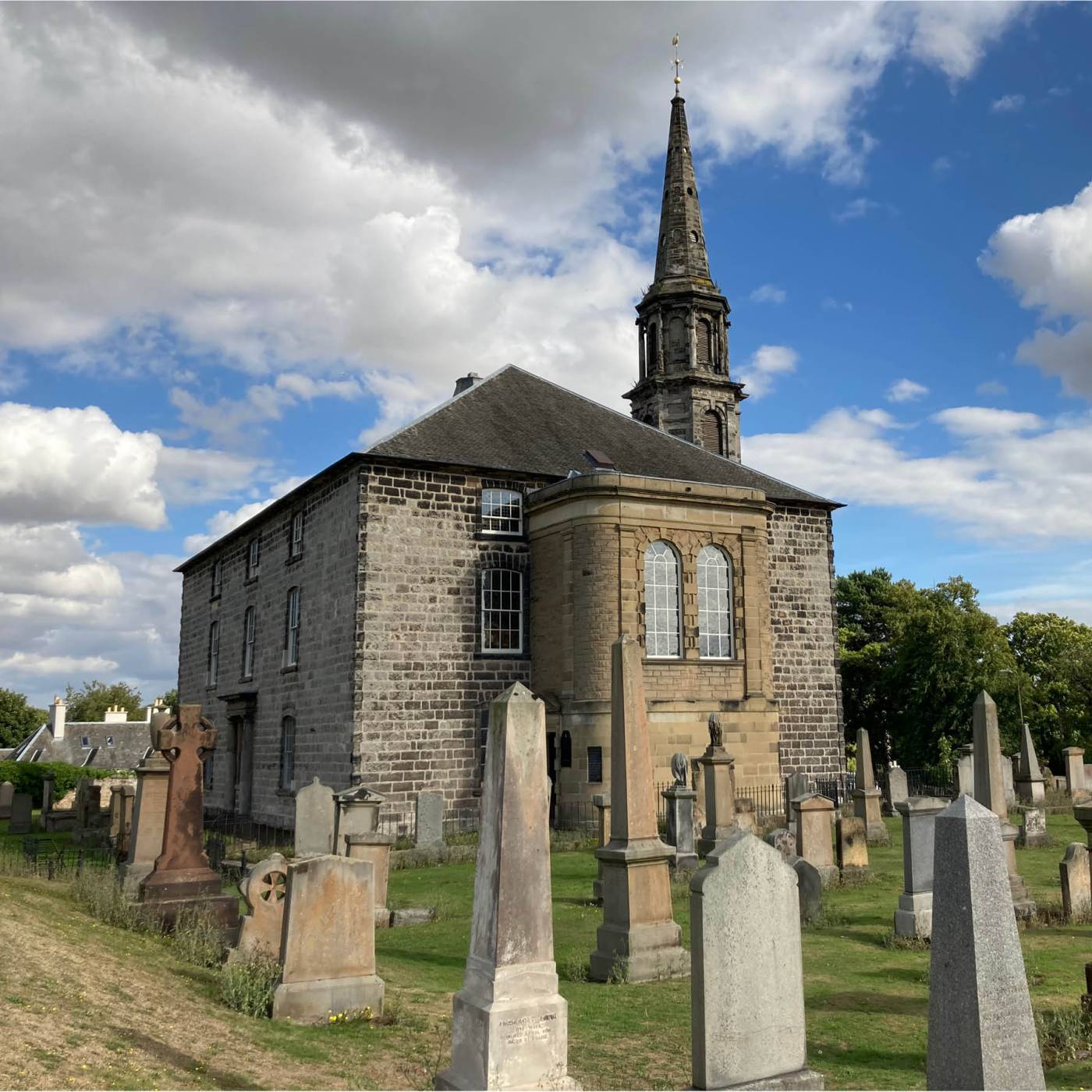
St Michael’s Church in Inveresk has to be one of the most noticeable buildings in East Lothian, perched on top of a hill and with its steeple easily seen as you speed along the A1.
Legend has it that a church was built here by Irish missionaries not long after the Romans left. During the medieval period a stone church was constructed, but by the end of the 1700s it was in a poor condition and in 1805 work began on a replacement.
The main body of this new church was designed by Robert Nisbet, and it must have come as something of a shock for the congregation. This was a building drawing on all the classical fashions of the day, a large, airy and light structure in direct contrast to a typical medieval church. A local tradition has it that one parishioner, “being somewhat alarmed at the barn-like shape”, asked the Duke of Buccleuch to fund the building of a steeple.
However it came about, an impressive tiered steeple designed by William Sibbald was quickly added. It also forms the main entrance, with a design copied from the temples of ancient Rome or Greece. For some members of the congregation, walking into church through a doorway inspired by pagan traditions must have been a rather strange experience.
This cutting-edge design was undoubtedly the idea of the minister, Dr Alexander Carlyle. He was firmly on the moderate wing of the Church of Scotland, with an interest in the theatre and science, and mixing with the great thinkers of the day at the Poker Club.
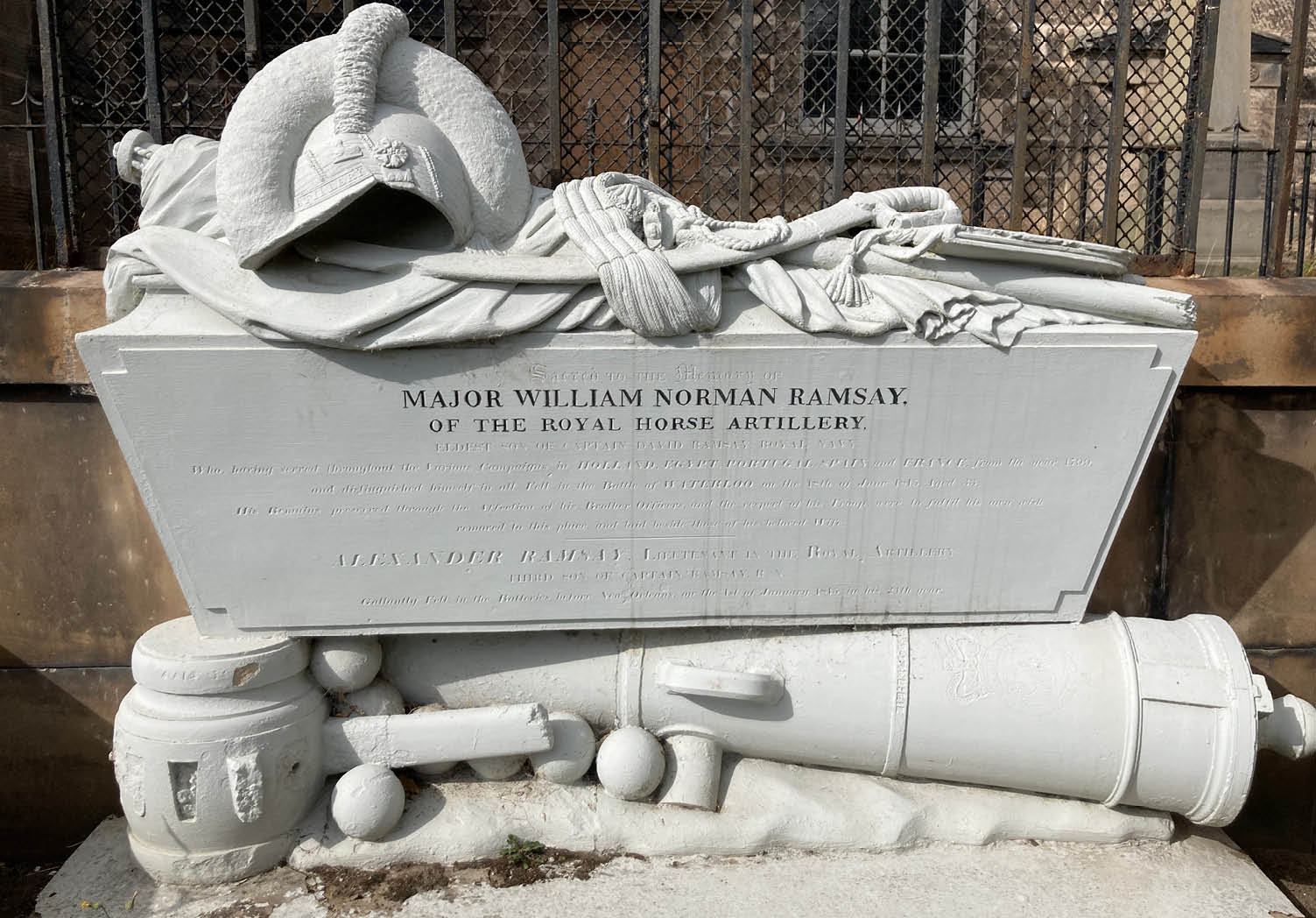
The graveyard surrounding the church has a monument to another famous character of the day, Major William Ramsay. He was a distinguished officer in the Royal Horse Artillery who died at the Battle of Waterloo in 1815. Ramsay was hastily buried on the battlefield but later reinterred at St Michael’s with a rather fine monument. Like the church, this is inspired by examples from ancient Rome, but with a cannon, helmet and sword to commemorate the life of a gallant soldier.
There’s nothing remotely shocking about St Michael’s today; it seems perfectly fitting for
the historic village of Inveresk. But it is still a prominent landmark, and the steeple was clearly money well spent.
 yourlocallife.co.uk